The Kingsway
A duplex inside a listed
school conversion.
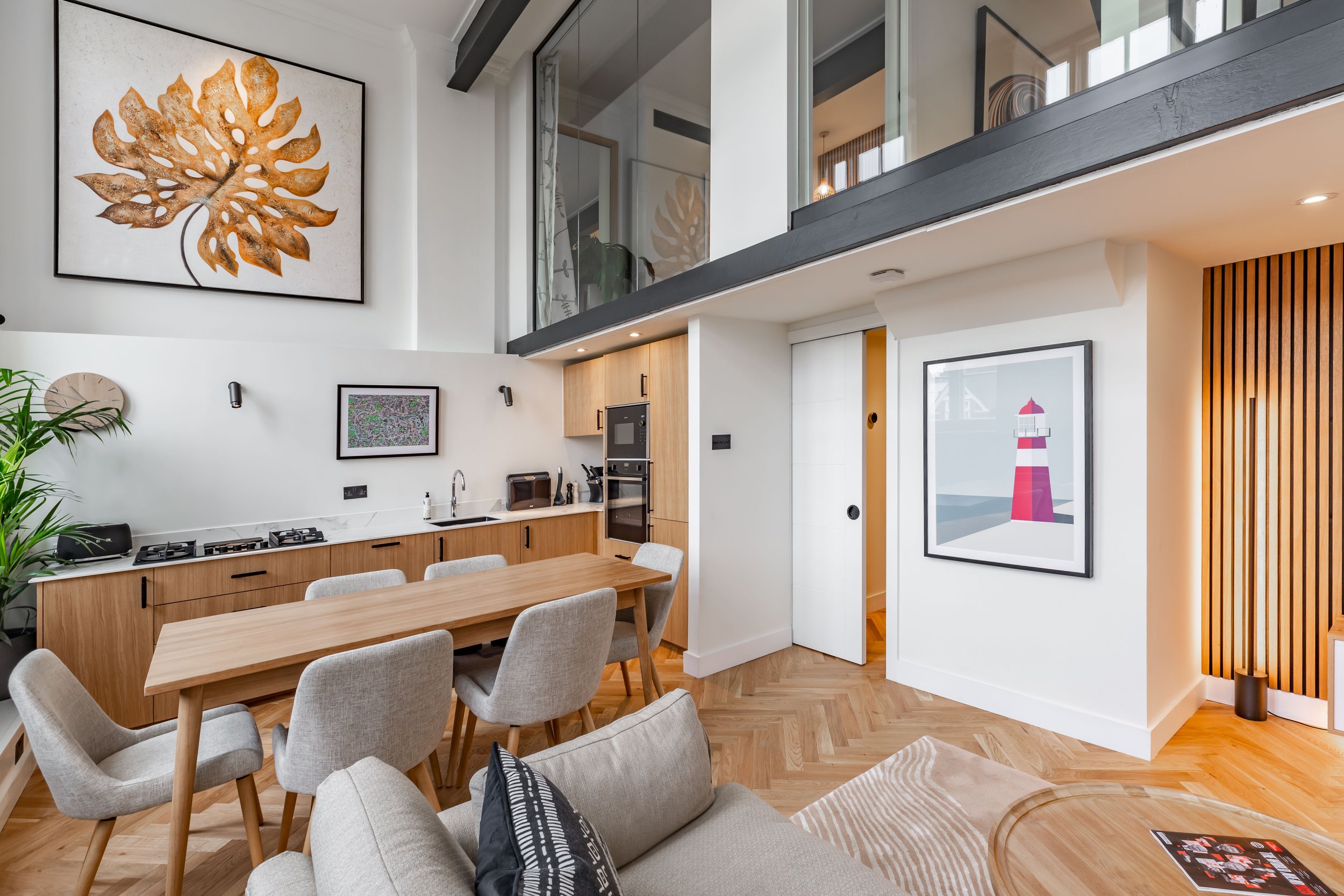
An apartment on two levels inside a converted boarding school, a listed building with generous volumes, original fabric and an industrial hardness the conversion never quite softened.
When we started it was dark and broken up. Little daylight reached the mezzanine or the central hallway, the layout worked against the way the owners wanted to live, and the decoration had grown tired.
Open it up, and keep
the bedroom private.
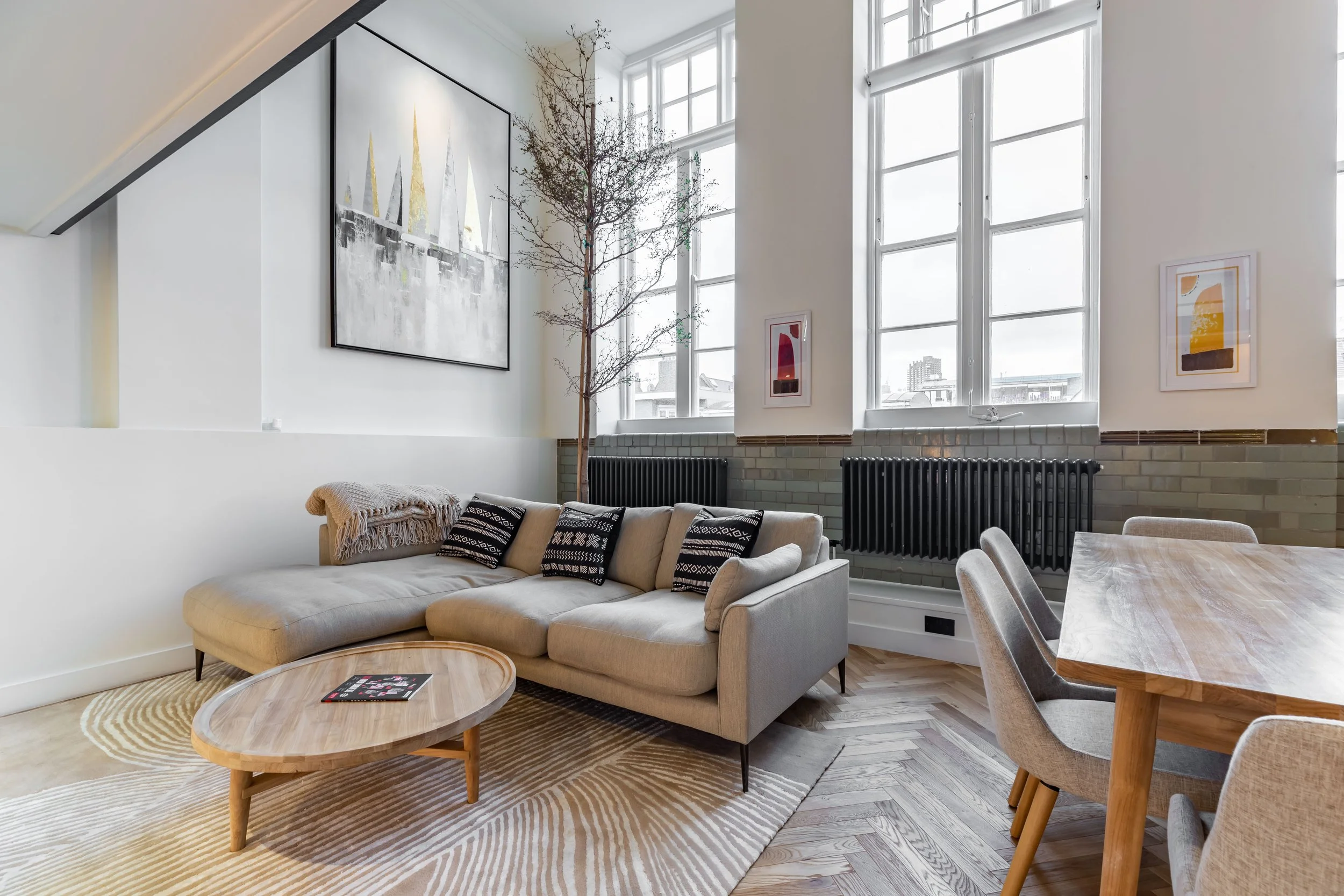
The owners wanted one cohesive living space, a kitchen that worked harder, a dining area worth sitting down in and enough built-in storage to keep every room calm. The building’s heritage features were to be the first thing you noticed.
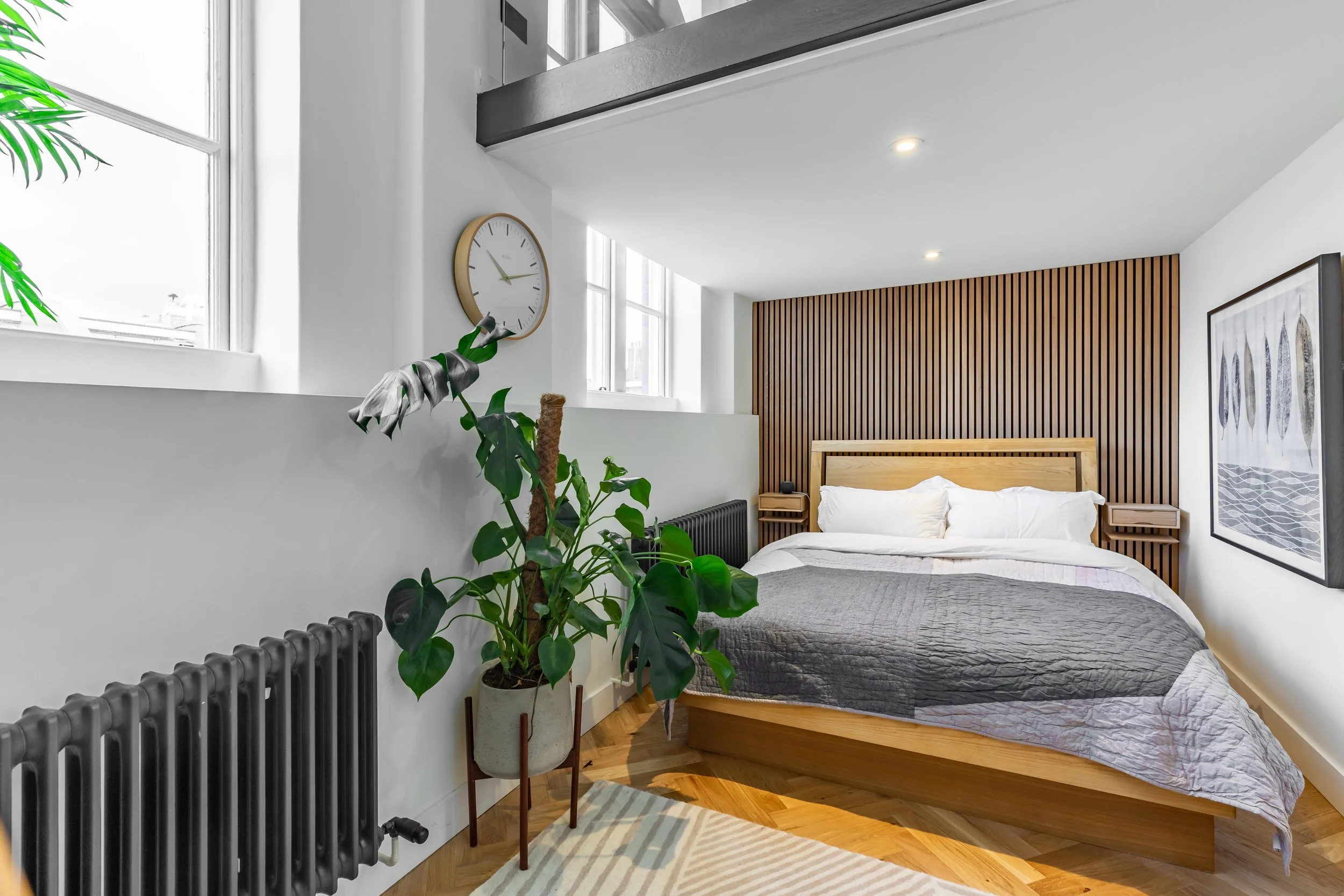
Against all that sat the mezzanine master bedroom, which needed both privacy and daylight. An open plan gives you neither for free. Open the flat up and the bedroom becomes a gallery over the living room. Close it off and the light stops at the wall. Resolving that was the project.


Rooms made with glass,
not walls.
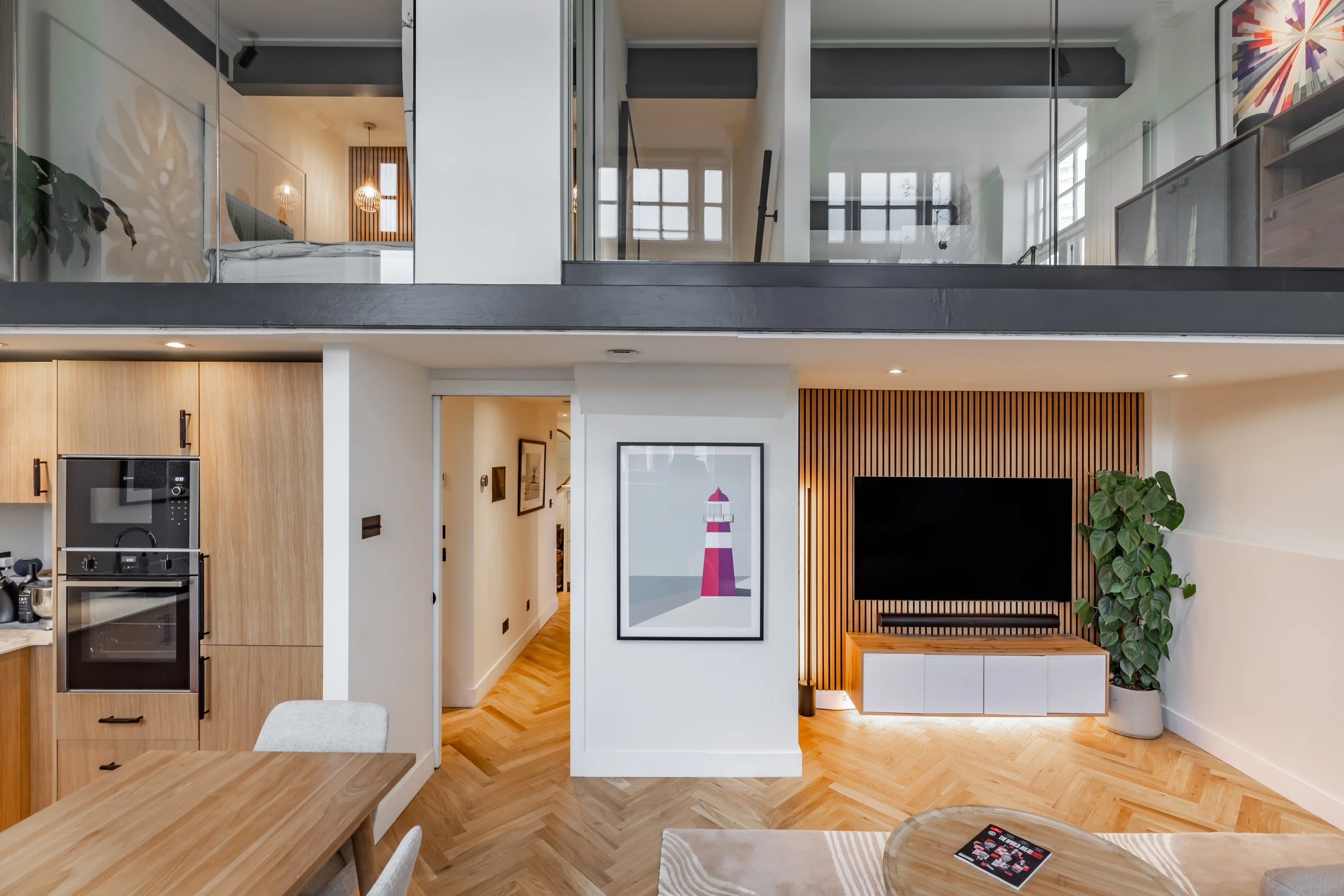
The answer was to define rooms with things that let light through, so the apartment gained privacy and structure without losing its daylight or its sense of space.
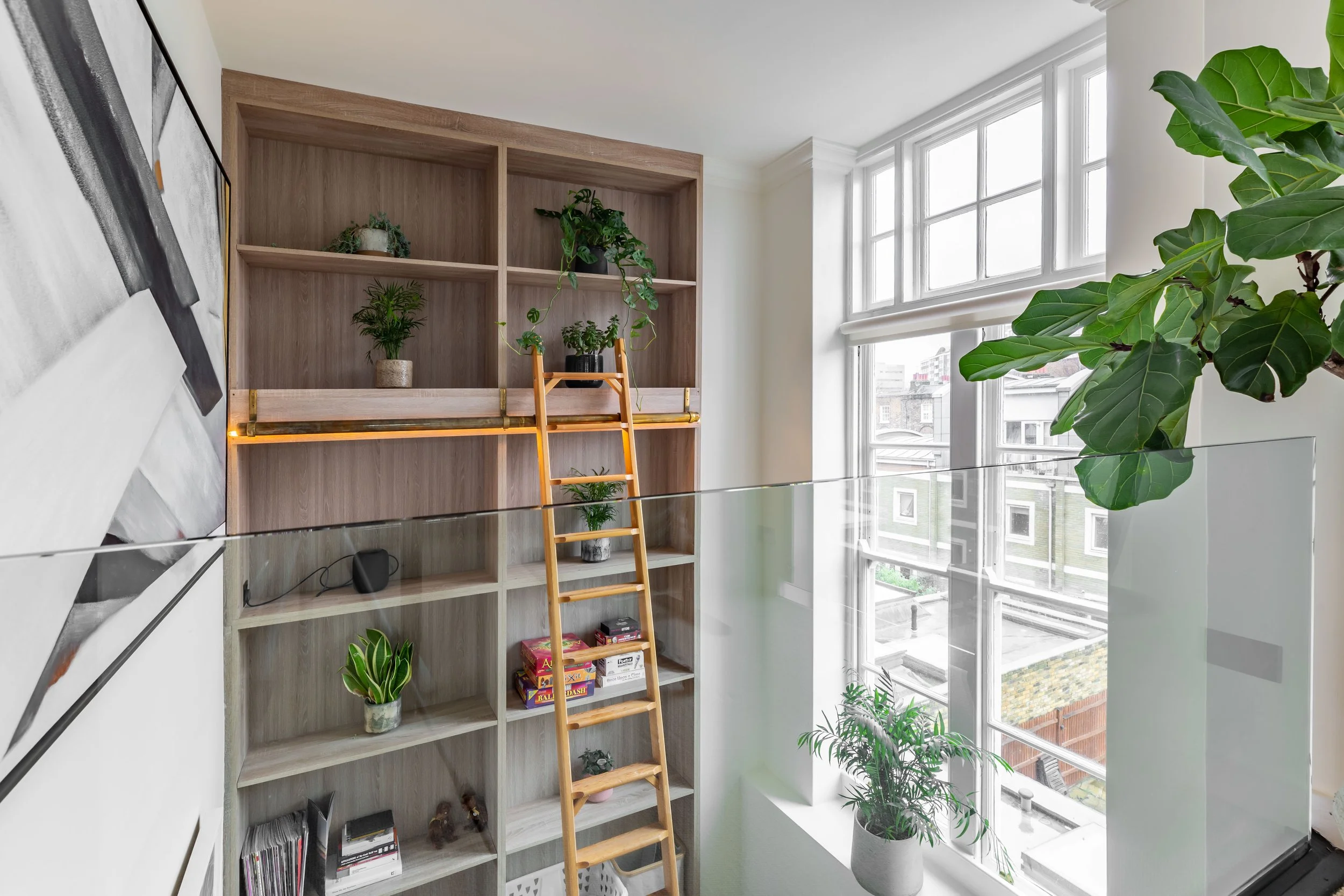
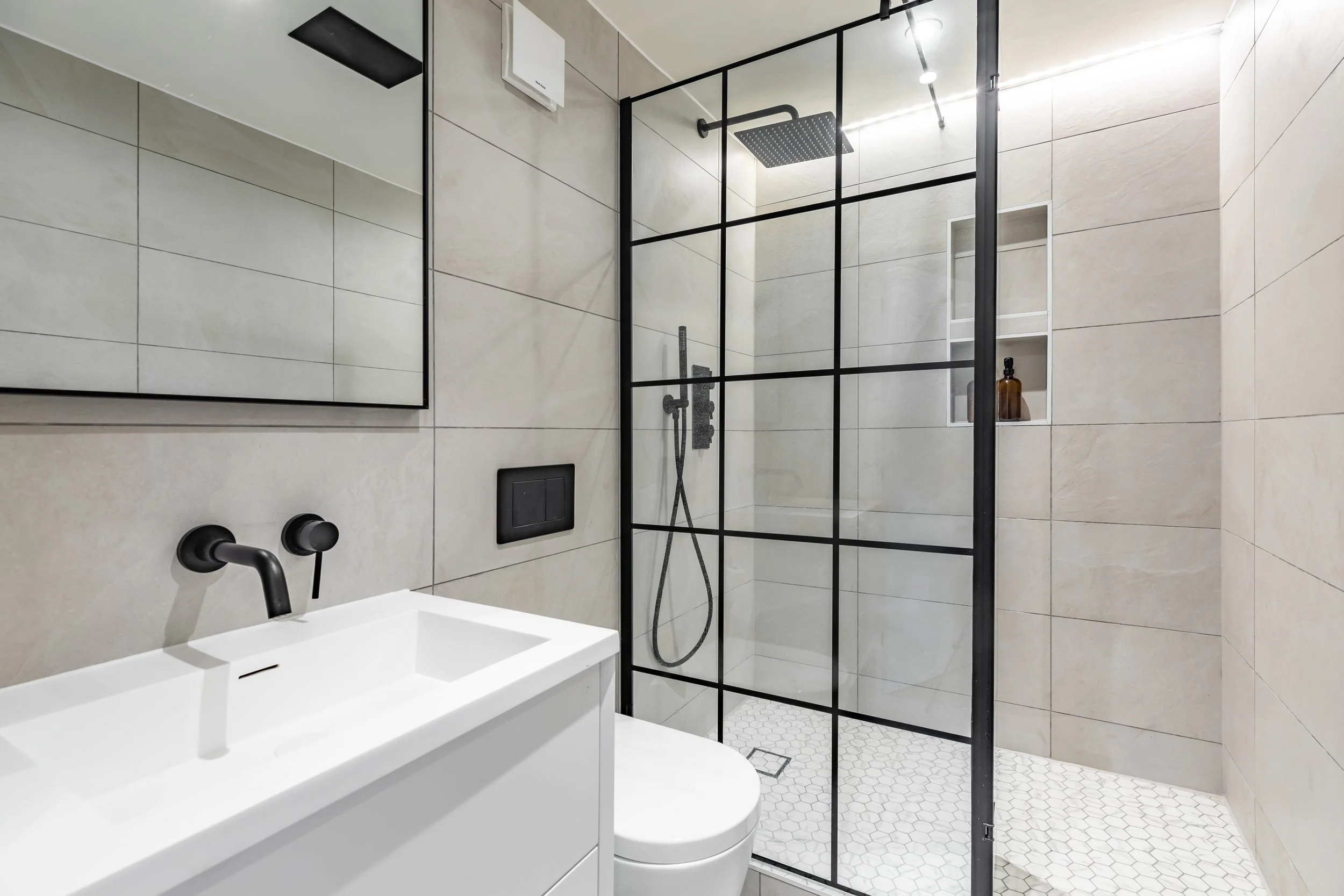
- Glass partitions and sliding doors. They carry daylight into the mezzanine and the central hallway, the two darkest parts of the flat, without shutting either off from the rest.
- Discreet pocket doors. Day to day the rooms stay open to each other. When the master bedroom needs privacy, it has it. Openness and definition chosen moment by moment, not fixed in plaster.
- The steel balustrade replaced. It belonged in a commercial building, not a home, and did more than anything else to make the flat feel like a converted institution. A full-height glass partition took its place.
- Storage in the nooks. Reconfiguring the open plan turned awkward niches into built-in storage, so the rooms stay calm without adding furniture.
- A Japandi palette. Natural timber, earthy tones and textured finishes soften what remains of the industrial fabric: warm oak, clean cabinetry lines and bespoke joinery, pared back so the heritage detail reads first.
A listed building limits what you can change, so the gains have to come from what you add rather than what you remove. Almost every decision here was about moving light around a plan whose walls were largely fixed.
How this project ran.
After a face-to-face site survey, the design ran largely online. The project combined technical drawings with a mixture of our room makeover packages.
If you are looking at a property with the same kind of problem, a listed or protected building, an awkward mezzanine, or a plan you cannot change much, the place to start is a call. Fifteen minutes, free, and if you need an architect before you need us, we will say so.
Book a discovery call