 Image 1 of 2
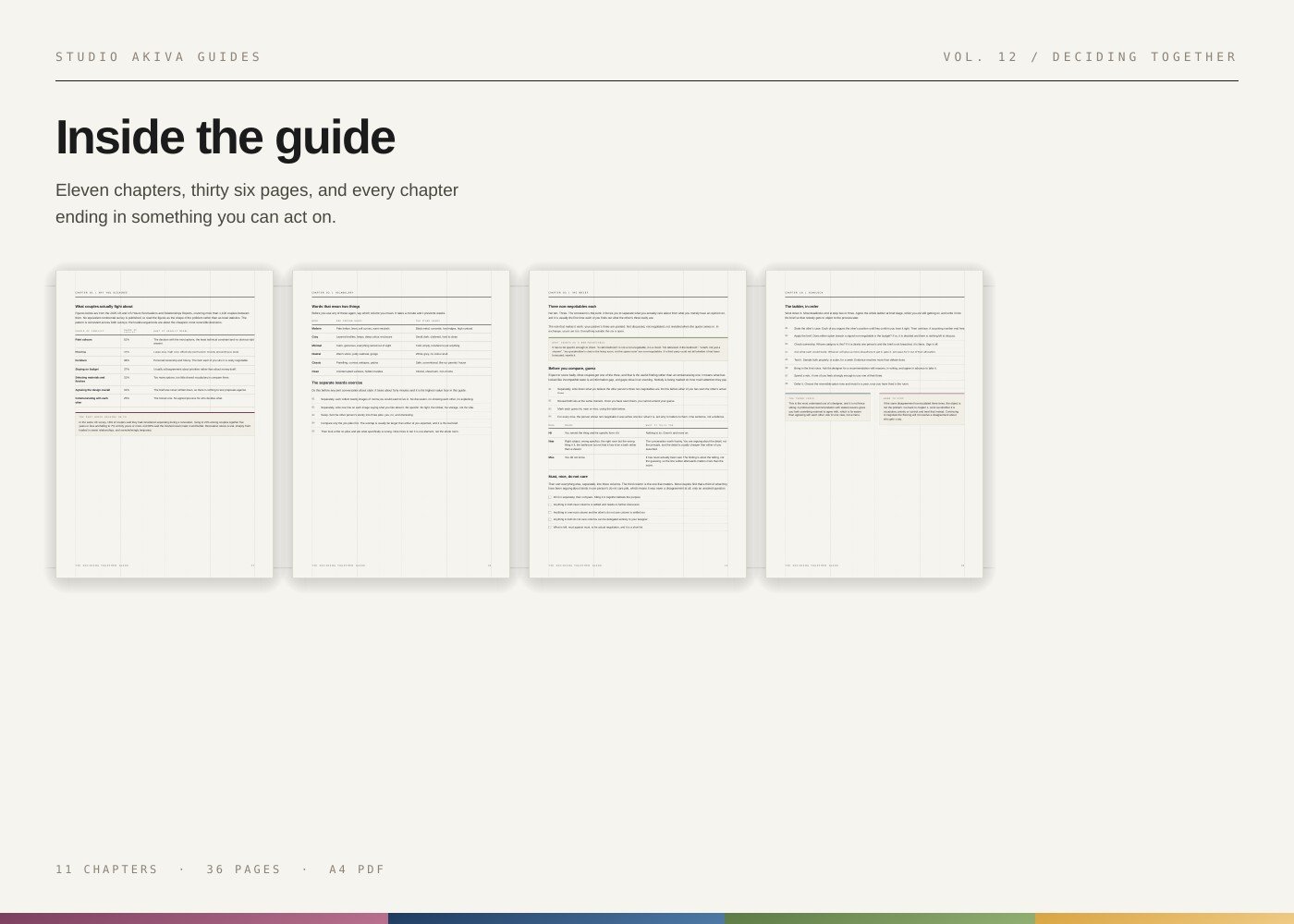 Image 2 of 2
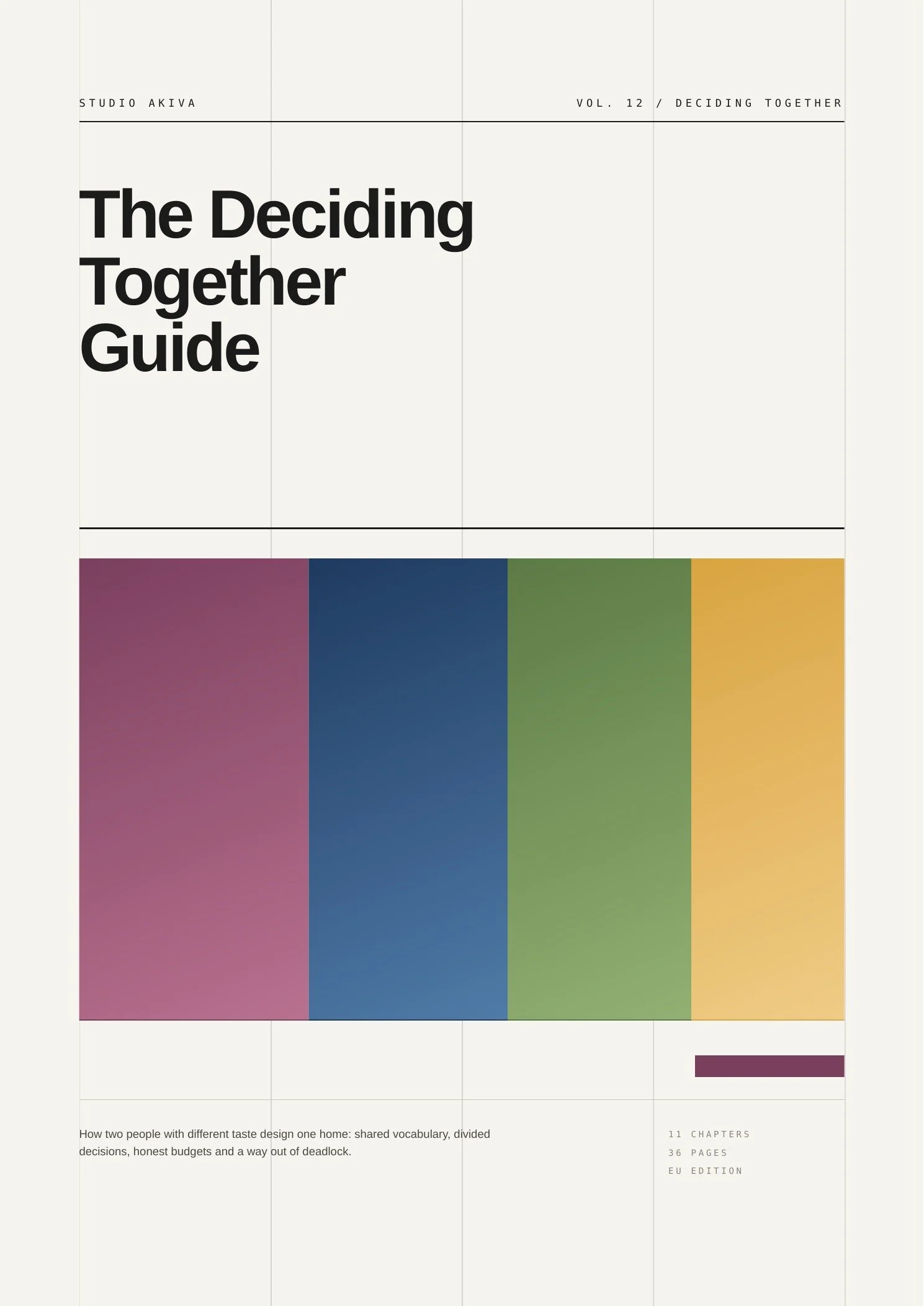
How two people with different taste design one home: shared vocabulary, divided decisions, honest budgets and a way out of deadlock.
Two people. One house.
A thousand decisions.
Almost every couple we work with believes they are the difficult one. They are not. Designing a home together demands hundreds of aesthetic judgements, in public, against a deadline, with money attached to each one. This guide is not about learning to like the same things. It is about a process good enough that your differences produce a better house rather than a stalled one.
Diagnose before you negotiate
Most arguments are vocabulary, priority or control, and each has a different remedy. Apply the wrong one and things reliably get worse.
A brief you both sign
One page written weeks before the pressure starts, with three non-negotiables each, granted without discussion. It is the only referee you will have.
Trade, do not halve
Whole categories owned outright and three vetoes each. Splitting the difference on every choice produces the house nobody chose.
A worksheet for both of you
Budget allocation, category owners, decision dates and a deadlock rule agreed in advance, signed and handed to whoever is designing or building.
- 01Why You DisagreeIt is almost never about the sofa. Vocabulary, priority or control, how to tell which one you are in, and why the three need entirely different remedies.
- 02Building a Shared VocabularyWords that mean two things, the separate boards exercise, and replacing adjectives with checkable references: RAL, NCS, LRV and colour temperature.
- 03The Brief You Both SignThree non-negotiables each, granted without discussion. Guess the other person's first, then sort everything else into must, nice and do not care.
- 04Dividing the DecisionsWhole categories owned outright rather than halved, three vetoes each, and why one room each does not work.
- 05Money as the Neutral ArbiterAllocate the budget by category before you shop, one transfer each, and how late changes are handled under your contract and § 650b BGB.
- 06Shared Rooms and Private RoomsSomewhere for each of you that is not a compromise, without the house reading as two houses.
- 07Where Compromise Ruins a HouseSplit the difference on forty decisions and you get the house nobody chose. What the negotiation research says to do instead, and the one place compromise is right.
- 08Deciding Under PressureThe order you decide in changes what you decide. Constrained choices first, the 200 paint samples last.
- 09Test Before You CommitSamples at the right size, in the right light, on two walls. Many disagreements settle for free.
- 10Deadlock, and How to Break ItAn escalation ladder agreed before you need it, because a rule invented mid-argument is never accepted by the person it goes against.
- 11Living With the DecisionsA year in, what people regret is almost never the thing they argued hardest about.
- +The Agreement WorksheetNon-negotiables, category owners, budget allocation, the decision order with dates and the deadlock rule, signed by both of you and handed to whoever is designing or building.
The process is universal.
The references are European.
How two people reach a decision does not change at a border. What this edition changes are the references: colours named in RAL and NCS, the systems most European manufacturers publish against, and late changes of mind under § 650b BGB for German projects, which gives the contractor 30 days to agree terms. The survey figures come from the 2025 UK and US Houzz Renovations and Relationships Reports, because no equivalent continental survey is published, and they are presented as the shape of the problem rather than as local statistics.
Add to basket using the button at the top of this page. Your download link arrives by email straight after checkout.
What format is it?
A 36-page A4 PDF. Your download link arrives by email straight after checkout, and you can read it on any device or print the worksheet pages to fill in together.
Is it only for couples?
It is written for couples because they are the commonest case, but the process works for any two people designing one home: siblings sharing a flat, a parent and an adult child, or co-owners of a holiday house.
Do we both need to read it?
Ideally, yes. Chapters 1 to 4 are designed to be read together, in one sitting, before you look at a single product. Chapter 7 is the one to reach for when you are stuck.
Is this relationship counselling?
No. Studio Akiva are interior designers. This guide is about the decisions a house demands and a process that makes them possible. If the difficulty in your household turns out not to be about the house, a qualified therapist will help more than any designer can, and the guide says so.
Which country is it written for?
The process works anywhere. The technical references are European: colours in RAL and NCS, and late changes under § 650b BGB for German projects. The survey figures come from the 2025 UK and US Houzz reports, because no equivalent continental survey is published, and the guide presents them as the shape of the problem rather than as local statistics.
Can I cancel or get a refund?
This is digital content supplied immediately. At the point of purchase you expressly consent to us beginning supply before the end of the withdrawal period and acknowledge that your 14 day right of withdrawal ends once the download link is issued. The full notice is at studioakiva.eu/widerrufsbelehrung. Separately from that: if the link fails, the file will not open, or you received the wrong guide, email hello@studioakiva.com and we will put it right or refund you.
Would you rather we did it?
Studio Akiva is an award-winning interior design studio working across Europe and a twelve-time Houzz award winner. If the two of you would like a third voice in the room, book a free fifteen-minute discovery call.